MOQ, Samples and Lead Times: What to Confirm Before Ordering
Understand MOQ by variant, sample approval and production lead times, with LANCE inspection examples and a checklist of what to confirm before ordering.
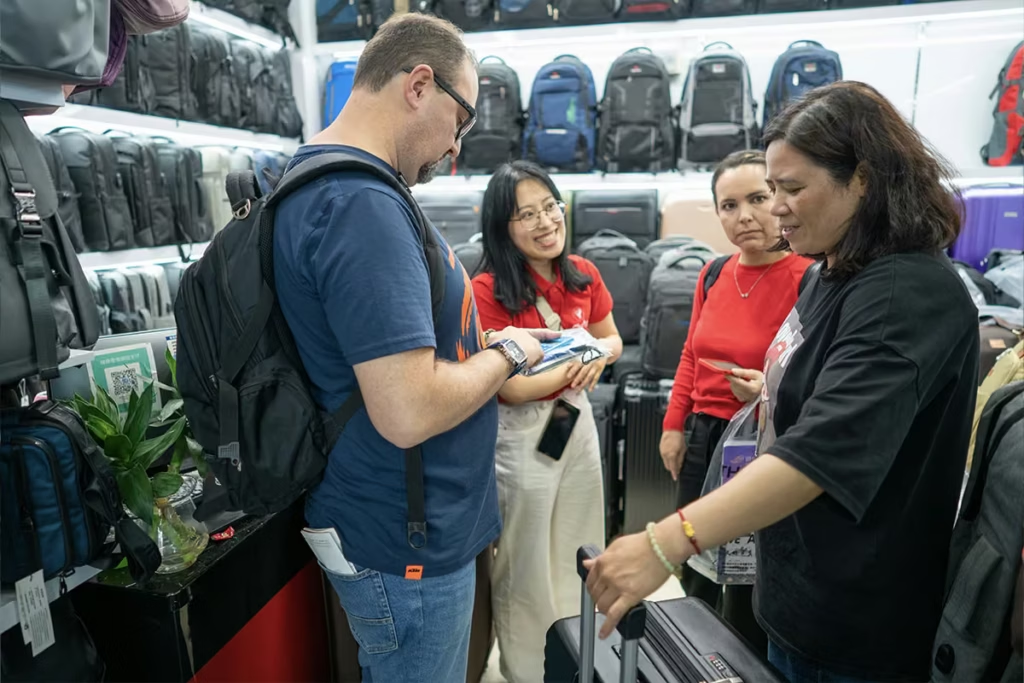
Three terms to pin down
MOQ sets the minimum you must buy. A sample helps define what you are buying. Lead time sets the schedule between an agreed start point and an agreed end point. Check all three against the same product specification, quantity and packing requirements, because a change to the color mix, logo or packaging may change the offer.
If you visit Yiwu, a price written beside a booth number is only the starting point. Before you order, you need to know three things: whether the minimum applies to the whole order or to each variant, whether the sample represents the product you intend to buy, and whether the quoted days end when production is complete or when the goods are handed over for shipment.
What MOQ actually covers
Minimum order quantity (MOQ) is the smallest quantity that a supplier accepts under the quoted conditions. Ask what the minimum applies to. It could apply to the entire order, to each model or SKU, or to each color, size, material option, logo version or packing variant. A supplier may apply more than one minimum.
Keep three other terms separate from MOQ. A carton or pack multiple is the increment in which goods are packed. A minimum order value is a spending threshold. A price break is a quantity at which the quoted unit price changes. None of these terms automatically tells you the minimum for each product variant.
Illustrative example — invented figures, not a LANCE quotation: Suppose the supplier requires 300 units in total and 100 units per color. Three colors at 100 units each meet both conditions. Five colors at 60 units each reach 300 units overall but fail the per-color minimum. So ask the supplier to confirm your proposed variant mix, not just the total quantity.
Combining shipments from unrelated suppliers does not, on its own, meet any supplier’s MOQ. Each purchase still has to meet the terms agreed with that supplier. Our guide to combining orders from several suppliers explains the separate receiving and shipping work involved.
If the minimum is too high
Before you ask for a lower minimum, ask which requirement drives it. The cause might be a material purchase, production setup, a print run or a custom packing order. Then ask the supplier for a written alternative:
- Existing stock: Ask what quantity is available in the exact color, size and packing that you need. Confirm the condition of the stock and whether the supplier can reserve it for you.
- Fewer variants: Compare offers for a smaller range of colors or sizes that still includes the variants you actually need.
- Standard specification or packing: Ask whether removing a custom requirement would change the minimum, the price or the schedule.
- A trial order: Request a quote for a smaller first quantity. Ask the supplier to include any different unit price or setup charge.
- Staged delivery: If the supplier offers this option, clarify the payment, storage and release dates. Receiving the full quantity in two deliveries still commits you to buying the full quantity.
Which sample are you getting?
Suppliers use different names for sample types. Rather than relying on the label, ask how the sample was made and how it differs from the order you intend to place.
- Stock or showroom sample: An existing item. It may show the general product, but it may differ from your requested material, color, dimensions, logo or packing.
- Prototype: A development piece used to check appearance, fit or function. Its materials and manufacturing method may differ from those used in production.
- Pre-production sample: A piece prepared before the main run so that you can review the proposed specification. Confirm which materials, processes and packing it represents, and which details are still provisional.
- Production sample: A piece taken from the actual production run so that it can be compared with the approved requirements. One piece does not show the condition of the entire batch.
Sample preparation, courier transit and bulk production are separate parts of the schedule. Ask when the sample can be dispatched and how long delivery is expected to take.
Make approval specific
“Sample approved” is an incomplete record if nobody can identify which version was approved or which exceptions remain. Record the sample reference, revision, approval date, agreed checks and any unresolved items. Agree who keeps the physical reference sample and the photographs, and make the relevant records available to whoever will inspect production.


The same report also records a retained cloth sample on page 5, but notes that the cloth was still subject to final confirmation by the factory. The useful lesson is the difference between what has been checked and what is still open. Having a sample on file does not mean that every material decision is final.
For your order, turn a general approval into specific requirements. These include dimensions and agreed tolerances, the color or finish reference, assembly and fit, logo position, packing and any required tests. If a detail changes, record the new version and reconfirm any effect the change has on price, MOQ and timing.
If a detail changes, record the new version and reconfirm any effect on price, MOQ and timing.
MOQ, Samples and Lead Times: What to Confirm Before Ordering

For example, this branch connector raises a specific review question: does the connector fit securely into the part it is meant to join, and does it assemble as agreed? The photograph alone cannot answer that question, so pair the visual reference with a defined check. See comparing materials and finishes for more product-level checks.
A separate LANCE pre-shipment report shows an approved blue bookend reference sample alongside inspection records, including dimension and thickness checks. Sample approval and production inspection serve different purposes. The Canadian Trade Commissioner Service likewise advises that a good sample does not remove the need for production quality control. Our inspection report guide explains what to record.
When does the clock start?
Map every stage of your lead time
Confirm the start trigger
Identify which condition starts the clock — approved artwork, sample sign-off, material availability or an agreed payment — and establish when each will be met.
Allow for sample preparation and approval
Treat sample dispatch, delivery, review and any agreed revisions as a separate block of time, not part of the production count.
Confirm production readiness and completion
Ask when materials will be available, when the production slot is scheduled and what date goods will be complete and packed.
Schedule inspection and handover
Establish when goods will be ready for inspection, what happens if corrections are needed, and the exact handover location and date.
Work backward from your arrival date
Plan transit and destination handling with your forwarder. A warehouse-ready date is not an arrival promise; agree the handover date and how delays will be communicated.
The start date may depend on approved artwork, sample approval, material availability or an agreed payment. Find out which of these conditions apply to your order and when each one will be met. Do not assume that the clock starts on the day you first request a quotation.
Then separate the milestones:
- Sample preparation and approval: Include dispatch, delivery, your review and any agreed revisions.
- Production readiness and manufacturing: Confirm when materials will be ready, when production is scheduled and when it will be completed.
- Inspection, corrections and packing: Find out when the goods will be ready for inspection and what happens if corrections are needed.
- Shipment handover and dispatch: Name the handover location, and coordinate collection or booking.
- Transit and arrival: Plan the route, destination handling and final delivery with your forwarder.
Some stages may overlap, while others cannot start until the previous stage is finished. Ask the supplier which stages depend on others, rather than simply adding every duration together or assuming that everything runs at the same time. Also confirm how supplier holidays and planned closures affect the schedule.
LANCE’s brochure shows a custom-product path that runs from 2D design to 3D modeling, mold making and the final product. It shows why a new molded product needs a development schedule as well as a production schedule. An existing product with a changed label may follow a different path, so ask which stages your request actually needs.
For stock goods, confirm the exact quantity and variants available, the reservation terms, and the time needed for any repacking or labeling. “In stock” does not, by itself, establish a dispatch date.
Finally, work backward from your required arrival date together with your forwarder. A production-completion date or a warehouse-ready date is not a promise of arrival. Agree on the planned handover date and on how delays or specification changes will be communicated.
What to confirm in writing
| Topic | Confirm with supplier | Keep in writing |
|---|---|---|
| MOQ basis | Quantity minimums by SKU, color, size or packing; any order-value minimum | Minimum quantity at each level for your specific variant mix |
| Sample version | Exact type (stock, prototype, pre-production, production batch), revision number, what it does and does not reflect | Version description, dispatch date, courier, any open points |
| Sample cost | Making/material, tooling or artwork if applicable, courier, revision rounds included | Itemized costs and any credit or refund conditions |
| Approval record | Who retains the approved sample, how changes are handled, whether photos are shared | Dated approval confirmation, photos, any conditional acceptances |
| Lead time trigger | Which conditions must be met before counting starts (spec, artwork, sample approval, payment) | Start conditions, expected dates and working or calendar days |
| Lead time endpoint | What “ready” means, the handover location and whether transport is included | Endpoint definition and expected handover date |
| Changes after approval | Whether any specification, material or packing change requires re-confirmation of price, MOQ and schedule | Agreed change process and re-confirmation in writing before proceeding |
Questions before you order
Can I mix colors to reach MOQ?
Only if the supplier’s agreed rules allow it. A supplier may set a total minimum and also a per-color or per-size minimum. Send the quantity for each variant and ask the supplier to confirm that exact mix.
Are sample fees refunded after ordering?
Not automatically. Some suppliers offer a credit against the order, but do not assume that yours will. Ask which charges qualify, whether a minimum order is required, and when the credit will be applied. Courier, development and tooling charges may each have different terms.
Does a fast sample mean fast production?
Not necessarily. Sample dispatch alone does not give you a reliable production schedule. A supplier may have an existing sample ready to send while the order still needs materials, a production slot or custom packing. Ask for the production schedule separately.
Does lead time include shipping?
It depends on where the quoted lead time ends. Ask whether it ends at production completion, warehouse handover, dispatch or destination delivery. Then add the remaining stages to your arrival plan, taking care not to count the same stage twice.
Sources and image notes
- LANCE initial inspection report, pages 4–5: Frame and cloth reference samples, recorded checks and an open cloth confirmation. These are archived examples, not current lead-time quotations.
- LANCE pre-shipment inspection report: Approved bookend reference sample and recorded dimension and thickness checks.
- LANCE brochure, page 4: Custom-product development stages. The connector photograph comes from MA140; it illustrates a check, not an approval record.
- Shopify: Minimum order quantity — background on MOQ and order constraints.
- Canadian Trade Commissioner Service: Sourcing Road Map — samples and production quality control.

Jack
10+ years of management experience, sharing insights on market trends, product positioning, and business growth.


