China Supplier Consolidation: How to Ship from Multiple Suppliers
Learn how China supplier consolidation works, when it saves money, and how to choose the right consolidation partner for your imports.

What Is China Supplier Consolidation?
China supplier consolidation means collecting finished goods from two or more Chinese suppliers at a single warehouse in China. The goods are inspected and combined there, and then everything is exported as one outbound shipment. Without consolidation, each factory ships directly to you, and every shipment generates its own freight booking, export document set, customs entry, and destination handling charges. With consolidation, all goods meet at one point before they leave China.
The core value is simple. When you source from several factories, per-shipment fixed costs multiply quickly. Every separate booking carries its own origin handling fee, minimum freight charge, documentation cost, and destination customs entry. Consolidation replaces those repeated charges with a single set, and that is where the freight saving actually comes from.
Consolidation is often confused with LCL (less-than-container-load) shipping, but the two solve different problems. LCL is a sea freight mode: your cargo shares a container with other importers’ goods, and the carrier controls how space is allocated. Consolidation is a warehouse operation that belongs entirely to you. All the goods in the consolidated shipment are yours, and they move under a single master bill of lading. The consolidated shipment can then travel by LCL if the volume doesn’t fill a container, by FCL if it does, or by air freight if speed is the priority.
Consolidation vs. LCL: What's the Difference?
Consolidation
- A warehouse operation you control
- All goods in the shipment belong to you
- Moves under a single master bill of lading
- Can then travel by LCL, FCL, or air freight
LCL Shipping
- A sea freight mode controlled by the carrier
- Your cargo shares a container with other importers' goods
- Space allocation is decided by the carrier
- One specific freight mode, not a warehouse operation

A dedicated consolidation warehouse also differs in an important way from using a factory as a receiving hub: it acts as a neutral, independent control point. If you route one supplier’s goods through another supplier’s factory, you expose your pricing, product sources, and purchase order details to a party that has a commercial interest in that information. A warehouse that works with many unrelated suppliers has no such conflict.
Consolidation benefits three types of buyers most: ecommerce brands building mixed-SKU inventory, Amazon FBA sellers sourcing from multiple Chinese factories, and importers whose individual supplier orders are too small to fill a container on their own but are worth shipping together once combined.
When Does Consolidation Actually Save Money?
Consolidation most reliably reduces total landed cost when you have multiple small orders that would each qualify only as LCL or express parcels on their own. In that situation, every separate shipment pays its own origin handling, minimum charge, and destination customs entry, and combining them eliminates the duplication. The saving is also meaningful when suppliers have staggered ready dates that would otherwise force you into several separate air shipments. Consolidating those orders into one sea freight booking can cut per-unit freight cost substantially.
To make the comparison concrete, imagine four suppliers whose goods each occupy roughly 0.5 CBM. If each supplier ships individually, each booking carries its own LCL minimum charge, origin handling, and destination customs entry, so you pay those charges four times. If you combine the goods into a single 2 CBM shipment, you pay one set of those charges. The freight rate per CBM may also improve because you are booking a larger volume. The saving comes from these specific charges, not from a general claim about efficiency.
Individual Shipments vs. Consolidated: Volume per Booking (CBM)
| Item | Value CBM |
|---|---|
| Supplier A (individual) | 0.5 |
| Supplier B (individual) | 0.5 |
| Supplier C (individual) | 0.5 |
| Supplier D (individual) | 0.5 |
| All four consolidated | 2 |
However, consolidation is not automatically the right choice. It is likely not worthwhile in three situations:
- One supplier already fills a container. If a single factory’s order reaches FCL volume, you gain nothing by routing other small additions through a consolidation warehouse just to ship them together.
- Production dates are more than two or three weeks apart. The first supplier’s goods sit in the consolidation warehouse while they wait for the last supplier’s goods. Storage fees accumulate, and, more importantly, you lose selling time. If you needed the goods in stock, a shipment that saves on freight but arrives three weeks later may cost more than it saves.
- Suppliers are in distant provinces far from major ports. Trucking goods inland from scattered factories to a single consolidation hub can cost more than you save on ocean freight.
Consolidation directly affects four cost components: ocean or air freight (one booking instead of several), origin handling charges (paid once, not per supplier), documentation fees (one export document set), and destination customs brokerage (one entry instead of multiple). A full comparison must also include China domestic delivery to the consolidation warehouse, receiving fees, storage duration, and any repackaging charges. If you compare freight quotes alone and leave out those inbound costs, you will consistently overstate the saving.
The most reliable way to decide is to convert both options into a per-unit freight cost and compare that figure with the difference in delivery time. Depending on your inventory position, a shipment that saves money on paper but delays stock availability by weeks may not be the right choice.
How the Consolidation Process Works
Supplier consolidation moves through six stages from start to finish: supplier coordination before goods leave the factory, inbound receiving at the warehouse, quality inspection, repackaging and labeling, documentation preparation, and export customs filing. Each stage has its own requirements and failure points. The sequence matters because a problem at an early stage, such as a late delivery, a mislabeled carton, or a packing list discrepancy, can lead to a delayed shipment or a customs hold that affects the entire consolidated order.

Coordinating Suppliers Before Goods Move
Before any goods leave a factory, you or your consolidation partner must give each supplier a clear, written delivery instruction. The instruction should include four pieces of information: the consolidation warehouse address, the required carton marks for your account, the packing list format the warehouse expects, and the confirmed delivery deadline.
Standardized carton marks are not a formality. Inconsistent or missing marks are the leading cause of misrouted inbound cargo. If cartons arrive without legible marks that identify the buyer, purchase order, and supplier, the warehouse cannot log them correctly. In a busy warehouse that handles multiple accounts, mislabeled cargo creates real confusion, and resolving it takes time and labor.
Managing suppliers with different production lead times is the more important operational issue. The consolidation warehouse needs a fixed cut-off date: the point after which it will not hold any additional inbound deliveries for the current shipment. You must communicate this date to every supplier at the start, rather than negotiate it after production slips. If one supplier misses the cut-off, that supplier’s goods will either ship separately, which eliminates part of the saving, or delay the entire shipment for every other supplier. Without deliberate advance planning, neither outcome is acceptable.
Build Your Master Schedule Around Four Dates per Supplier
Production completion
Confirm the date when the factory expects all units to be finished and ready for inspection.
Inspection at the factory
Schedule any pre-shipment inspection while at least 80% of goods are produced and packed, leaving time for the supplier to address findings.
Warehouse arrival
Set the date by which each supplier's goods must reach the consolidation warehouse, with a realistic buffer based on actual delivery reliability — not the supplier's quoted lead time.
Outbound cut-off
Fix the point after which no additional inbound deliveries will be held for the current shipment, and communicate it to every supplier at the start of the production cycle.
Receiving, Inspection, and Quality Control at the Warehouse
When each supplier’s goods arrive at the consolidation warehouse, the warehouse first performs a receiving check. It counts the pieces, checks carton condition, and compares the delivery against the packing list that the supplier submitted. The check sounds routine, but it is the moment when a problem such as a 480-unit delivery against a 500-unit purchase order becomes visible. At this point, nothing has been exported, the supplier is still reachable, and a replacement or credit is still practical.
Consolidation is the last practical opportunity for quality inspection before goods leave China. Once a consolidated container is sealed and on a vessel, re-inspection requires the goods to be received, unpacked, and assessed at the destination. That process is expensive and time-consuming, and it happens after import duties have been paid. It costs far less to catch defects, short shipments, or packaging non-compliance at the consolidation warehouse than to resolve them after arrival.
Consolidation is the last practical opportunity for quality inspection before goods leave China.
Receiving, Inspection, and Quality Control at the Warehouse

When a discrepancy or defect is found, the standard response is to isolate the affected cartons and photograph the issue with clear reference to the purchase order and supplier. The buyer should then be notified promptly, and a decision should be made before the shipment cut-off: hold the affected goods, return them to the supplier, or ship them and pursue a credit separately. The worst outcome is discovering the problem after the cut-off has passed, with no documented decision.
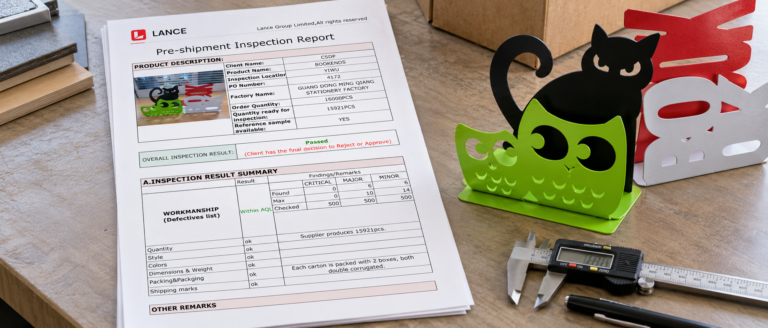
For higher-value goods or product categories with known quality risks, a pre-shipment inspection adds a second layer of control. The inspector checks a sample of units for workmanship, quantity accuracy, and packaging compliance. Schedule this inspection when at least 80% of the goods are produced and packed. At that point, the assessment is meaningful, and the supplier still has time to address findings before the warehouse cut-off. You can rely on warehouse staff for this check or commission a dedicated third-party inspector; the choice depends on the order value, the product complexity, and the supplier’s track record.
Repackaging, Carton Optimization, and Labeling
Once goods pass the inbound check, the warehouse may repack them to reduce chargeable weight or CBM before the outbound shipment is booked. Repacking is one of the concrete, measurable ways a good consolidator reduces freight cost. The saving comes not only from combining bookings but also from making better use of cargo space.
Several factors decide whether goods from different suppliers can go into the same master carton. Customs declarations require goods to be identifiable by origin and value. If you mix products from suppliers with different commodity codes, values, or country-of-origin marks in a single carton, the export declaration becomes more complicated. Products that need separate handling must also stay in their own cartons, including fragile items, goods with specific orientation requirements, and items with regulatory labels that must remain intact. When repacking is straightforward (for example, combining accessories from two suppliers that form one assembled product), it can meaningfully reduce the shipment’s CBM.

Labels must be consistent across every carton in the shipment. The destination address, country-of-origin marks, and any product-specific regulatory labels must match the export documentation exactly. For Amazon FBA shipments, each carton also needs the correct FNSKU or barcode label. FBA receiving requirements are strict: if a carton arrives at an Amazon fulfillment center with missing or incorrect labels, it is refused or relabeled at your cost. If your consolidation warehouse provides FBA prep in the same facility, that prep happens at this stage. You then avoid a separate prep operation at the destination, which would add cost and time.
Fragile, hazardous, or temperature-sensitive goods cannot be repacked or mixed with standard cargo, even if doing so would improve efficiency. These categories require their own handling and documentation, and in some cases separate transport arrangements.
Documentation and Export Customs
A consolidated shipment leaving China requires three core documents: a master packing list covering all suppliers’ goods, a combined commercial invoice showing the total value, and either a bill of lading (sea freight) or an air waybill (air freight). Depending on the product categories, you may also need additional documents, such as certificates of origin, product-specific compliance certificates, or test reports.
When goods come from multiple suppliers, it matters who is named as the exporter on Chinese customs declarations, for two practical reasons. First, the entity that files the declaration must hold the export license. Second, in China, the exporting entity claims the VAT rebate on exports. That detail affects the commercial arrangement between your consolidation partner and the individual suppliers. If a consolidation warehouse also handles export customs filing as part of its service, it resolves the issue by acting as the declared exporter. If the warehouse only stores goods, you will need to arrange a separate customs broker that has an export license.

A common documentation problem in consolidated shipments is conflicting invoice values from different suppliers. If one supplier under-declares the value on its commercial invoice while another declares accurately, the combined customs filing contains inconsistent data. Chinese customs declarations must reflect the actual transaction value. Before filing, invoice values must be aligned across all suppliers, and each supplier’s packing list and invoice must be checked against what the warehouse actually received. The consolidation partner should handle this step rather than leave the buyer to reconcile the documents at the last minute.
Documentation timelines differ significantly between air and sea freight. Air waybill cut-offs are much shorter than sea freight cut-offs, sometimes 24 to 48 hours before flight departure. The shorter window means that the warehouse has less time to wait for a late supplier’s delivery or a corrected invoice. For consolidated air shipments, set the cut-off date for inbound deliveries conservatively, and do not expect last-minute adjustments.
Common Risks and How to Avoid Them
Consolidation adds operational touchpoints that a direct factory shipment does not have: supplier coordination, inbound receiving, warehouse handling, repackaging, and export filing. At each of these points, something can go wrong, erase the cost saving, or delay the shipment. To build a consolidation plan that actually holds, you need to understand the specific types of failure rather than treat risk as a generic warning.
Planning and Supplier Communication Failures
The most common consolidation failure is a late supplier delivery that misses the warehouse cut-off. That leaves only two outcomes, and both are bad. The late supplier’s goods may ship separately, which requires a standalone freight booking and eliminates part of the saving. Or the entire shipment is held, which delays the goods that every other supplier delivered on time and generates storage fees while you wait.
Prevent this problem with planning built into the process, not with last-minute reactions. The consolidation warehouse must have a fixed cut-off date, communicated to every supplier at the start of the production cycle, and a clear policy that late arrivals will ship separately. That policy removes any reason for a supplier to assume that the whole shipment will wait. It also protects the other suppliers whose goods are ready on schedule.
Inaccurate packing lists from individual suppliers cause a second type of planning failure. If a supplier’s packing list shows 500 units but 480 arrive, or if the listed dimensions are wrong, the consolidation warehouse cannot prepare an accurate export declaration. Mismatches in the customs declaration cause delays at export and can trigger inspections. Require each supplier to submit a final, accurate packing list before goods leave the factory, not after they arrive at the warehouse. You can then catch these errors while there is still time to correct them.
A third planning gap is failing to confirm in advance whether each supplier is willing and logistically able to deliver to the consolidation warehouse address within the required window. Some smaller factories use freight agents who route deliveries through their own hubs. Others may have no experience shipping to a third-party warehouse instead of directly to a port. Before you set the cut-off, confirm the delivery method and timeline with each supplier. Otherwise, a supplier’s cargo may still be in transit to the wrong location when your shipment is booked.
Packaging, Labeling, and Insurance Gaps
Mixed or missing carton marks make it impossible for the warehouse to match inbound cargo to the correct purchase order or supplier. In a facility that receives goods for multiple buyers, staff cannot log an unlabeled carton from one of your suppliers against your account without further investigation. That investigation takes time and creates a risk that the carton is assigned to the wrong account. To prevent this, every carton from every supplier needs standardized, unambiguous marks, confirmed before goods leave the factory.
Consolidated shipments involve more handling than a direct FCL shipment. Goods are unloaded at the factory, loaded onto a truck, unloaded at the warehouse, moved during inspection and repacking, and then loaded again for export. Each extra touchpoint creates a chance of damage, particularly for fragile goods. Packaging that is adequate for a single trip from factory to port may not survive the extra handling in a consolidation workflow. If you source fragile products, ask the consolidation warehouse what packaging standards it expects and whether it provides any reinforcement through repackaging before outbound loading.

For Amazon FBA shipments, label inconsistencies across suppliers result in refused or mislabeled deliveries at the fulfillment center. Typical problems include different FNSKU formats, missing scannable barcodes, and carton labels that don’t match the FBA shipment plan. Amazon applies FBA receiving requirements uniformly and does not make exceptions for the complexity of consolidated shipments.
Choosing an Inexperienced Consolidation Partner
Choosing the wrong consolidation partner makes every other risk worse. Some providers lack dedicated consolidation infrastructure; for example, a general freight forwarder may simply store cartons in a corner of a warehouse. Such a provider cannot reliably manage inbound receiving for multiple suppliers, maintain accurate inventory records for each purchase order, or coordinate export documentation across different commodity types. The typical result is mislabeled or mixed cargo, longer dwell times, and unclear accountability when something goes wrong.
Signs of an unsuitable provider include no fixed warehouse in China’s main sourcing hubs, no documented experience with your specific product category, and no clear answer on whether it holds an export license or relies on a third party for customs filing. Also watch for a provider that cannot explain how it handles inbound receiving discrepancies or what happens when a supplier misses the cut-off. Those operational gaps will affect your shipment.
Before committing, ask prospective consolidation partners the following questions:
- Where is your warehouse located, and which supplier bases does that location serve efficiently?
- What is the maximum storage duration before demurrage or storage fees apply?
- What does your quality check scope cover — piece count only, or workmanship and packaging inspection?
- Do you hold an export license, or do you sub-contract customs filing?
- Which destination markets do you regularly ship to, and can you provide references from buyers in my destination market?
- Can you show sample packing lists and inspection reports from previous consolidated shipments?
If a provider cannot supply references from buyers in your destination market or cannot produce sample documentation, it has not shown the operational track record that these questions are designed to reveal. Failure to show a sample inspection report is especially revealing. It suggests either that inspection is not a standard part of the provider’s service or that documentation discipline is not a priority.
How to Choose a China Consolidation Company
The right China consolidation company has three qualities. Its warehouse location fits your supplier base, its services cover what you actually need, and its operations are transparent enough for you to verify what is happening to your goods before they leave China. The criteria below help you tell a reliable consolidation partner from a warehouse-only operator that takes custody of your goods without the infrastructure to manage them properly.
Location, Warehouse Capability, and Storage Terms
The first practical filter is the warehouse’s location relative to your suppliers. A consolidator based near Yiwu serves buyers sourcing from Zhejiang’s small-commodity manufacturing clusters. One near Guangzhou or Shenzhen is better positioned for electronics, apparel, and home goods from the Pearl River Delta. If the warehouse is close to most of your suppliers, the inland trucking cost that each supplier incurs to deliver goods is lower. That cost belongs in the total landed cost comparison; it is not an afterthought.

Beyond location, the warehouse itself must suit the physical requirements of your goods. Use this checklist to evaluate a consolidation warehouse’s capabilities:
- Secure, organized storage with inventory tracked per purchase order and per buyer account
- Product-specific handling for fragile, oversized, or high-value goods
- Clear storage duration policy — how many days of free storage are included, and what fees apply after that period
- Climate control if your products are moisture- or temperature-sensitive
- Amazon FBA prep capability within the same facility, including FNSKU labeling, carton-level compliance, and shipment plan alignment
Pay particular attention to storage duration. If your suppliers have genuinely different production timelines, early-arriving goods may sit in the warehouse for weeks before the last supplier delivers. Some consolidators include a meaningful free storage period; the specific terms vary by provider, so confirm them in writing before your first delivery. Others begin charging storage fees after a short grace period. Those fees can erode the freight saving if one supplier runs significantly late.
Some consolidators also set minimum shipment sizes or minimum order values. If your combined order volume is relatively small, confirm whether the provider’s minimum applies to you before you commit to its workflow.
Services, Transparency, and Track Record
A full-service consolidator and a warehouse-only operator differ significantly in practice. A warehouse-only operator receives your goods, stores them, and dispatches a combined shipment. You then handle QC coordination, export customs filing, and freight booking separately, often through different vendors. A full-service consolidator provides QC inspection, repackaging, export customs filing, and freight booking as one integrated workflow.
Using separate vendors for each step does more than add cost; it also splits accountability. Suppose one party handles QC, another handles export filing, and a third books freight. If a discrepancy is found during receiving, it has to be communicated across three organizations before anyone makes a decision. A single point of contact who manages supplier inbound coordination, inspection, and freight booking can make that decision in one round of communication instead of three.
These transparency indicators protect you as the buyer:
- Real-time inventory tracking: you should be able to see which suppliers have delivered and what the warehouse has received, without waiting for an email update
- Photo documentation on arrival: if you file a damage claim later, you will need photographs of carton condition at receiving, with reference to the purchase order, as evidence
- Itemized billing: consolidation fees, storage, inspection, repackaging, and freight should appear as separate line items rather than as one bundled charge, so you can verify where the cost saving actually comes from
To verify a consolidator’s track record, ask for references from buyers in your specific destination market who have shipped comparable product types. Export license credentials confirm that the provider can file Chinese customs declarations directly instead of sub-contracting that step to a third party and losing direct control over the declaration. Also consider years of operation and documented experience with your product category, such as electronics, apparel, general merchandise, or regulated goods. These indicators show that the provider has encountered and resolved the operational problems that your shipment is likely to face.
If you source from suppliers in or around Yiwu and need consolidation, inspection, and freight coordination as one integrated service, Lance’s sourcing and order management service covers supplier follow-up, consolidation, and export logistics through a single point of contact. If you have specific questions about your supplier mix or shipment volumes, you can contact the team directly.
Frequently Asked Questions
Does consolidation work for both sea freight and air freight from China?
Yes. Consolidation is a warehouse operation, so it does not depend on the freight mode. A consolidated shipment can travel by sea as LCL or FCL, or by air. Sea freight consolidation typically produces larger per-unit savings because individual LCL bookings carry high minimum charges, and combining shipments eliminates those repeated minimums. Air freight consolidation can also reduce minimum and pickup charges, but the absolute saving per unit is usually smaller because base rates are higher. Air also has a much tighter documentation cut-off, so the warehouse needs all suppliers’ goods and paperwork finalized well before the flight booking.
How long will a consolidation warehouse hold my goods while waiting for other suppliers?
It varies by provider, so confirm the terms in the service agreement before your first delivery. Some consolidators include a free storage period of several weeks or longer; others charge storage fees after a short grace period. The key point is the warehouse’s cut-off date: the point after which the outbound shipment is booked, whether or not all suppliers have delivered. That date is a fixed operational boundary, not a negotiable one. Plan your production schedules so that the last supplier’s goods arrive before the cut-off, or expect late arrivals to ship separately.
Can goods from different suppliers be packed into the same carton?
Sometimes, but only under certain conditions. Combining goods in a master carton is straightforward when they are complementary, such as accessories and a main product that form one assembled item. When suppliers’ goods have different commodity codes, declared values, or country-of-origin marks, mixing them in one carton complicates the customs declaration, so it is generally avoided. Fragile, hazardous, or regulated goods must stay in their own packaging. For Amazon FBA shipments, carton contents must match the FBA shipment plan exactly. You can mix different suppliers’ SKUs in one carton only if you build the shipment plan that way from the start.
Is consolidation always cheaper than shipping each supplier’s order separately?
No. Consolidation reduces total landed cost under specific conditions, mainly when several small orders would each pay LCL minimums or express parcel rates that disappear once the orders are combined. It is not cheaper when one supplier already fills a container, when production dates are so far apart that storage fees build up, or when inland trucking from scattered suppliers to a central warehouse costs more than the freight saving. A correct comparison adds warehouse receiving, storage, repackaging, and domestic delivery costs to the consolidation option, rather than relying on the outbound freight quote alone.
What is the minimum number of suppliers needed to make consolidation worthwhile?
Two suppliers can be enough if their combined volume approaches a meaningful shipment size and their production timelines are close. The number of suppliers matters less than the combined volume and the per-shipment fixed costs that consolidation eliminates. For example, one supplier shipping 4 CBM combined with another shipping 14 CBM is a stronger case for consolidation than five suppliers each shipping 1 CBM with production dates spread over six weeks. Start with the volume and the timing, and then work out whether consolidation saves money on your specific route.

Jack
10+ years of management experience, sharing insights on market trends, product positioning, and business growth.